
From the Initial Requirements Specification to Reproducible Series Production
High-performance composite components are never created in a single step. Between the initial product idea and the finished serial part lies a structured development and manufacturing journey where materials, design, simulation, and production must be precisely integrated. At BIONTEC, this process follows five clearly defined phases, from requirements analysis to full-scale production.
What makes the BIONTEC approach special is that every step is handled in-house. Our end-to-end process chain spans from the raw fiber to the finished component, ensuring that development and manufacturing are aligned from the very beginning. This article outlines how a composite project at BIONTEC works and what matters most in each phase.
The Five Phases of a Composite Project at a Glance
Every project follows a clear logic designed to minimize development risks and accelerate time-to-market. The following five phases form the framework:
- Requirements analysis: Defining load cases, environmental conditions, and production volumes
- Concept development: FEA optimization and evaluation of various solution approaches
- Prototype development: Validation under real-world conditions and iterative optimization
- Series ramp-up: Process stabilization, First Article Inspection, and quality testing
- Series production: Reproducible manufacturing with comprehensive documentation
Below, we examine each phase in detail.
Phase 1: Requirements Analysis
Everything begins with a precise definition of the component's performance requirements. During the requirements analysis, we establish load cases, environmental conditions, and planned production volumes. These parameters dictate every subsequent decision, from material selection to the manufacturing process.
The foundation is the customer's specification document. BIONTEC looks beyond the individual component to consider the entire assembly within its system context. This allows us to identify early on where functions can be integrated, parts consolidated, or interfaces simplified.
We approach our collaboration as a true partnership from the very beginning. We work together to define target parameters, load cases, and technical constraints, while tailoring the level of customer involvement to the specific needs of each project. This ensures that development remains consistently focused on actual requirements.
Phase 2: Concept Development
During concept development, requirements are transformed into concrete solutions. We evaluate and calculate various construction methods before selecting a variant for detailed design. This phase lays the foundation for economical and efficient component production.
Concept and Assembly Development
Based on the specifications, we develop various product concepts, such as monolithic designs, sandwich structures, or integrated hollow structures. Our focus is always on the entire assembly rather than just an isolated part.
Composite Design and Engineering
Our engineering process strictly follows the principle of Design for Manufacturing. By considering design and production together from the start, we can perfectly align geometry, fiber layout, and tooling concepts. This close integration also creates the basis for a consistent Design to Cost approach: material usage, manufacturing effort, and future production costs are specifically optimized during development, without compromising technical performance.
Thanks to the manufacturing technology used at BIONTEC, we enjoy great design freedom, allowing for complex geometries and the structural integration of functions and electronics directly into the component. This reduces additional process steps, minimizes the number of required parts, and increases both technical and economic efficiency.
Fiber Layup and Simulation
This is where the technical depth of the BIONTEC approach becomes clear. Components are designed according to load paths and verified through advanced finite element simulation. At the same time, manufacturing feasibility is addressed via Tailored Fiber Placement (TFP). This includes the process known as "punching", meaning the digital preparation and programming of the embroidery data so that the fibers can later be placed precisely along the defined load paths. As a result, simulation, design, and textile manufacturing work together seamlessly.
Phase 3: Prototyping and Validation
Before a component goes into series production, it must prove itself under real-world conditions. Prototyping makes concepts verifiable and tangible. We create functional sample parts that represent the final series production state as accurately as possible in terms of geometry and structure.
Validation includes rigorous testing and a thorough analysis of all results:
- Proof of Concept: Early testing of core functions with the flexibility to make adjustments
- Static and dynamic testing: Reliable data on strength, stiffness, and fatigue behavior
- Optimization of process parameters: Adjusting process variables at this early stage
- In-process analysis: Ensuring reproducibility and series production capability, for example using DSC (Differential Scanning Calorimetry) and TMA (Thermomechanical Analysis)
This iterative process uncovers weaknesses before they become costly in series production. For product developers, this means guaranteed performance and predictable next steps.
Phase 4: Production Launch
The production launch transitions the validated concept into a stable, repeatable manufacturing process. The focus is on locking in process parameters, First Article Inspection, and defined quality checks.
Because BIONTEC integrates design, simulation, and manufacturing in parallel from the start, the transition to series production is seamless. Key factors include:
- Coordination of geometry, fiber layout, and tool design
- Process definition for reproducible TFP and RTM manufacturing
- Scalable production strategies
- Documented quality and testing concepts
First Article Inspection confirms production readiness. From this point on, BIONTEC ensures reproducible production, regardless of volume.
Phase 5: Series Production
In series production, the component is manufactured in a reproducible, automated, and scalable manner. Production is based on an end-to-end, industrial-grade process chain that can be carried out entirely in-house. The essential steps are outlined below.
Tailored Fiber Placement (TFP)
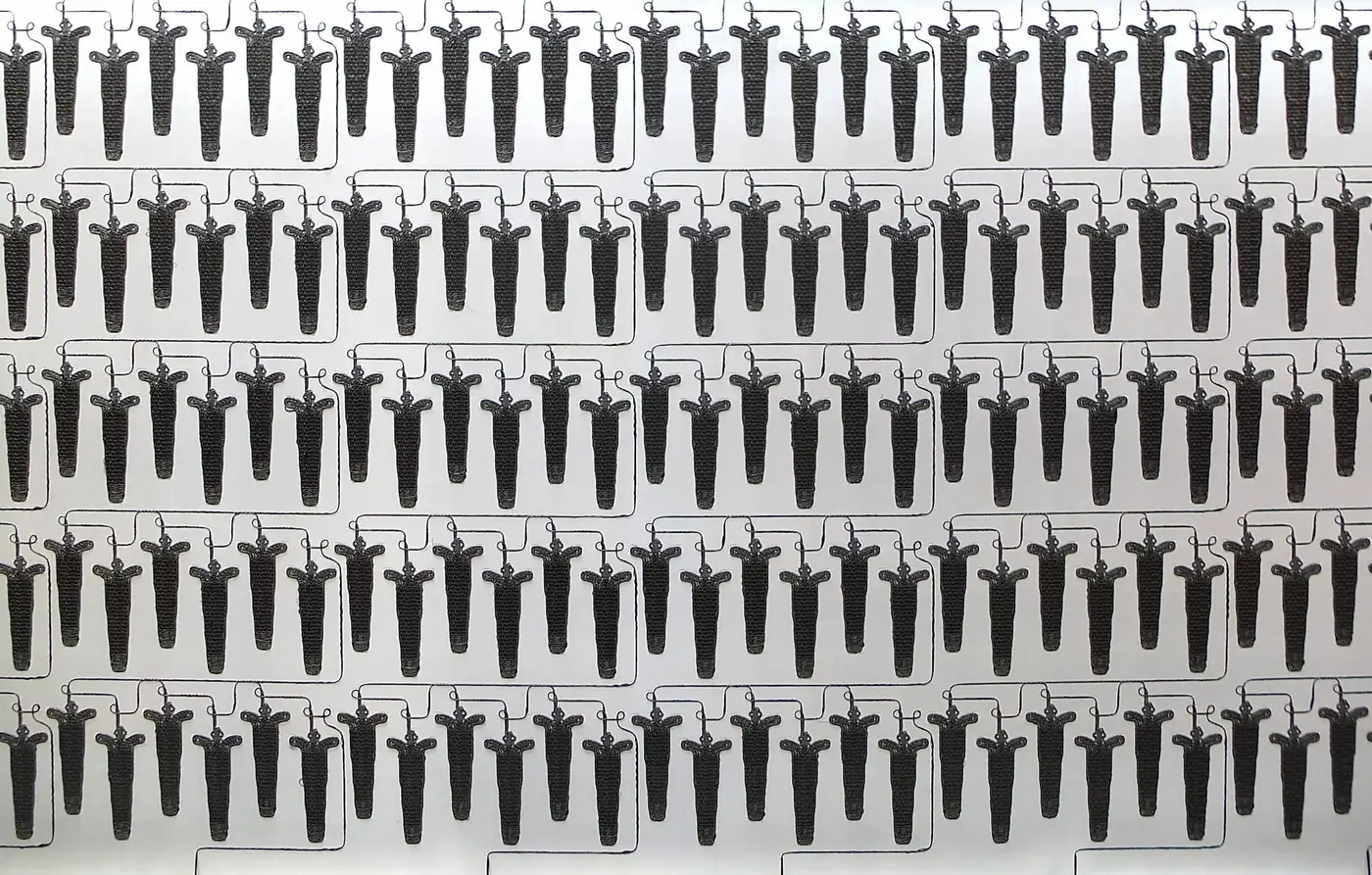
The core of our manufacturing is the TFP process. Reinforcement fibers, such as carbon or glass, are placed precisely along defined load paths on a carrier material using industrial embroidery technology. This load-path-oriented fiber architecture enables minimal waste and maximum material efficiency. Thanks to multi-parallel manufacturing, multiple layups can be produced simultaneously and in a highly automated fashion.
Removing the TFP Layups
Following the TFP process, the embroidery layups are treated according to the carrier material used. Soluble or temporary carrier materials are removed precisely and gently. If a functional carrier material is used, it remains in the composite and is processed in subsequent steps. In both cases, the defined fiber architecture remains fully intact.
Preform Assembly and Functional Integration
In the next step, the layups are assembled according to the component structure. The fiber layers are joined with precise positioning and, if necessary, supplemented with core materials or inserts. At this stage, functions and electronics such as sensors, heating elements, or conductive structures can be integrated directly into the preform. This structural integration eliminates the need for separate components and reduces assembly effort without compromising mechanical performance.
Consolidation: RTM or HCM
Consolidation transforms the preform into a durable, finished component. Depending on the matrix system used, BIONTEC employs two established processes for this:
- Resin Transfer Molding (RTM): for thermoset components. The preform is placed into a closed mold and infiltrated with resin.
- Hot Compression Molding (HCM): for thermoplastic components. Fiber-reinforced semi-finished products are pressed and cured in a temperature-controlled, closed mold under pressure and heat.
The following overview compares both processes:
Post-Processing and Finishing
Following consolidation, mechanical finishing is performed on 5-axis CNC milling centers. Contours, drill holes, and functional surfaces are executed with high precision. Upon request, BIONTEC handles complete finishing, including metallic coatings for requirements such as EMC, painting according to customer-specific design specifications, and printing.
Scaling and Ongoing Monitoring of Series Production
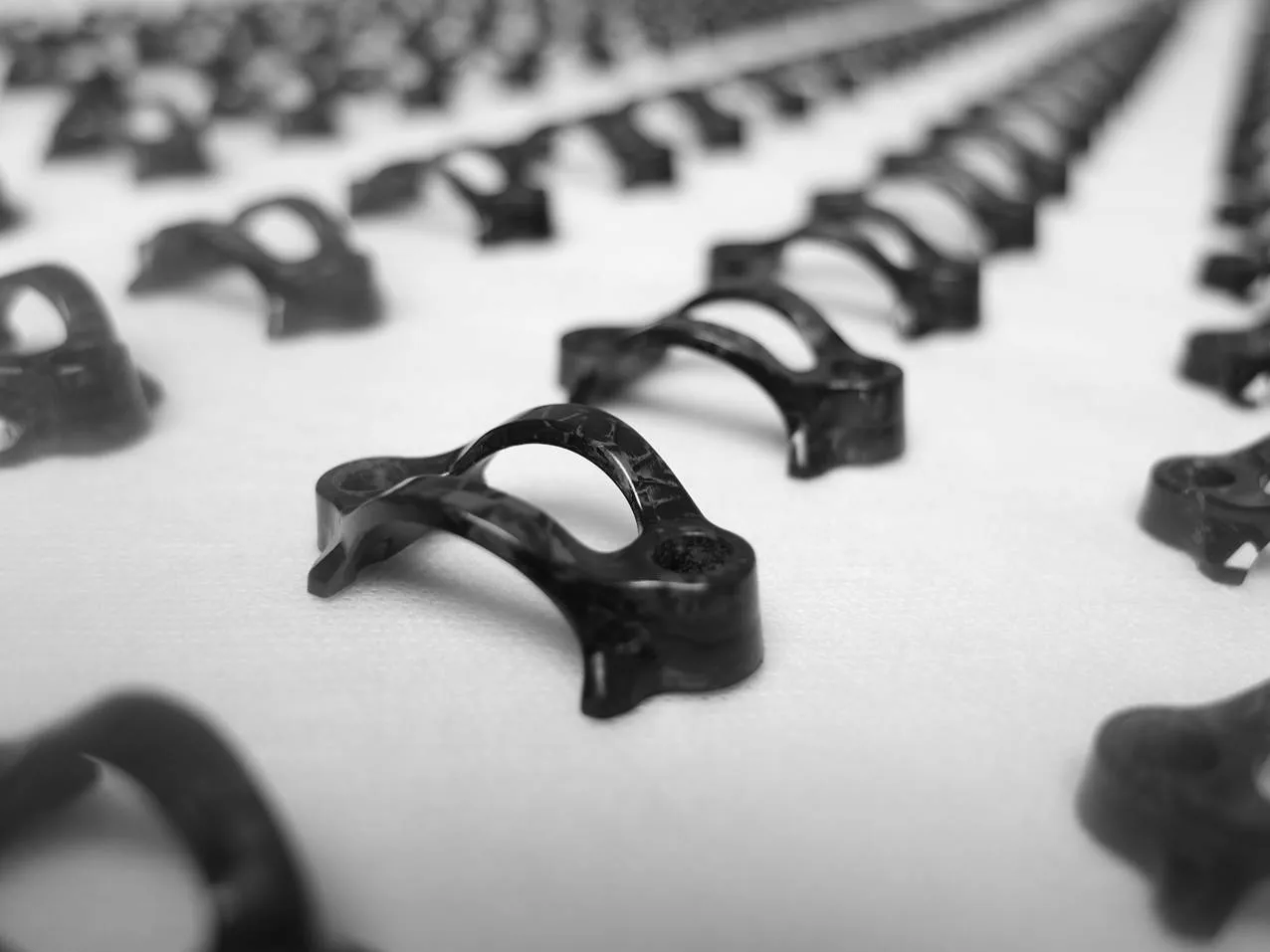
Finally, production is scaled to the required quantities. Through multi-parallel manufacturing of TFP layups and automated downstream processes, complex CFRP components can be produced in both small batches and annual volumes in the six-figure range. Defined process parameters and continuous quality inspections ensure consistent quality across all components.
Everything From a Single Source
A key advantage for customers lies in our holistic process chain: from the initial idea and development through to series production, BIONTEC remains the central point of contact for all questions regarding the development and manufacturing of composite components. Engineering expertise and many years of manufacturing competence interlock seamlessly, resulting in technically sophisticated solutions that are precisely tailored to individual customer requirements.
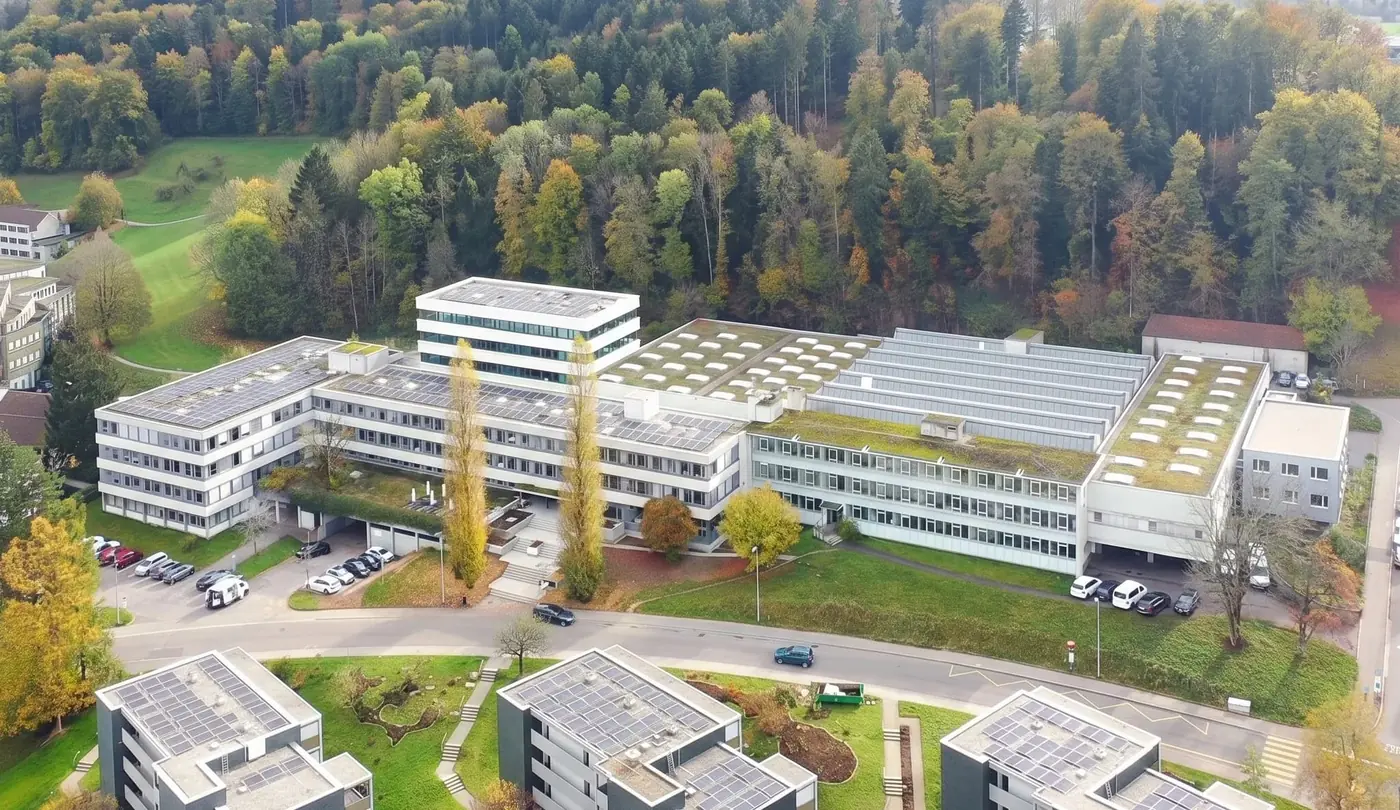
The commitment to a holistic process chain with a single point of contact applies across all locations. Uniform quality standards and coordinated processes ensure that the process chain remains consistent and that each production site can optimally contribute its respective strengths:
- Switzerland: High-quality products, prototypes, sophisticated series production, and the further development of technological production expertise.
- China: Efficient and scalable large-scale production based on validated BIONTEC processes.
- Romania: Operational support for Swiss production and series manufacturing of embroidery carriers.
The choice of production location is project-specific and depends on quantity, complexity, logistics, timeframe, and cost-effectiveness.
Conclusion: A Clearly Structured Path to Series Production
At BIONTEC, the journey from idea to series-produced component is not a loose sequence of individual steps, but a holistic process. The five phases ensure that requirements, design, validation, and manufacturing build consistently upon one another. This reduces development risks, ensures predictable costs and timelines, and results in composite components that excel in quality, performance, and reproducibility.
Do you have a component that could benefit from this end-to-end process chain? From requirements analysis to series production, BIONTEC manages your project from a single source. Contact us for a free, no-obligation consultation.