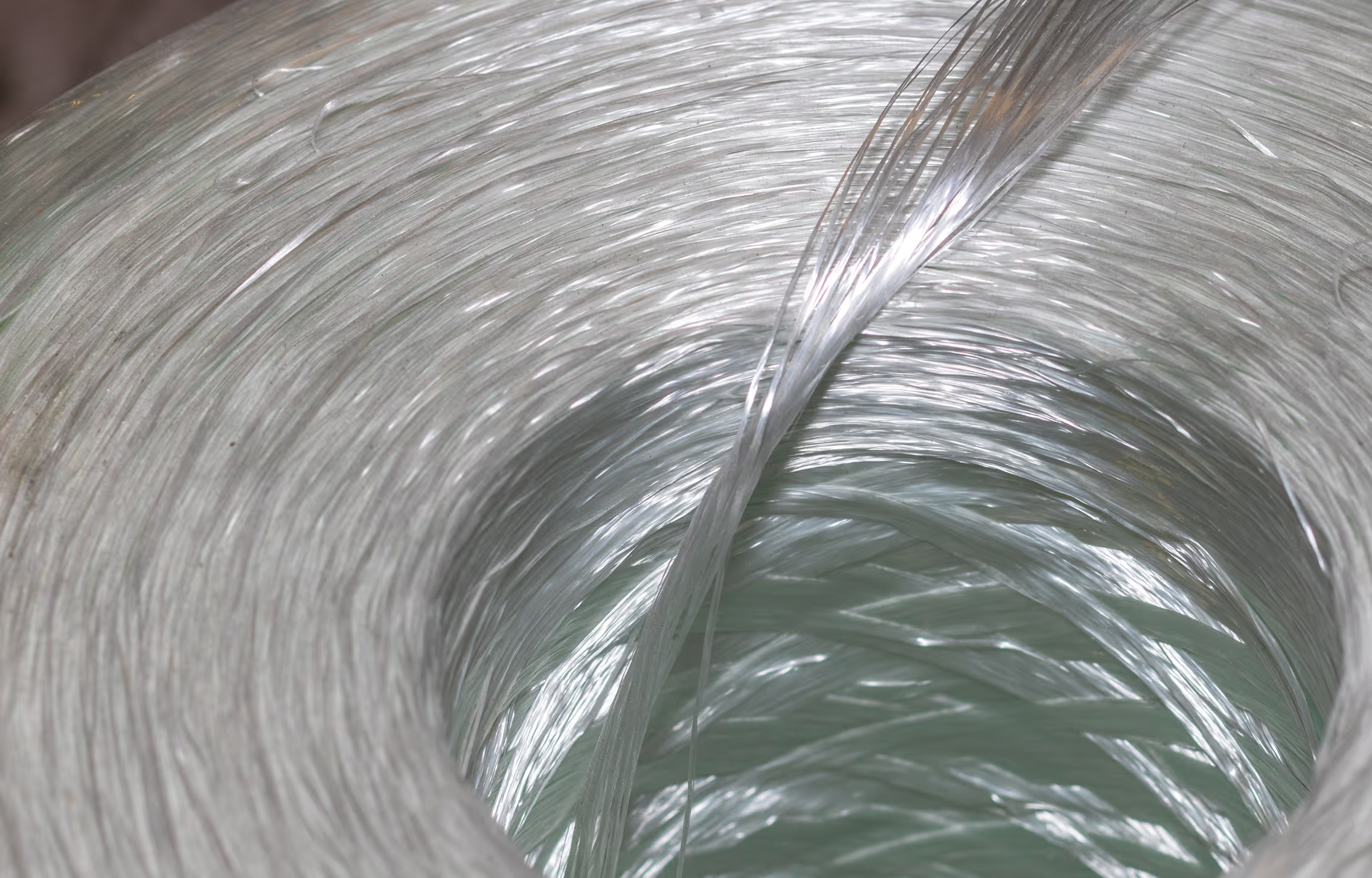
Glass Fiber Reinforced Plastics (GFRP)

Economical composite solutions for demanding applications

001
/
About

Glass fiber reinforced plastics (GFRP) are proven composite materials for applications where mechanical performance, durability, and cost-effectiveness are crucial. At BIONTEC, we develop and manufacture GFRP components with bionically optimized fiber architectures and precise manufacturing processes that are technically compelling and economically viable.
002
/
at a glance
What are Glass Fiber Reinforced Plastics?
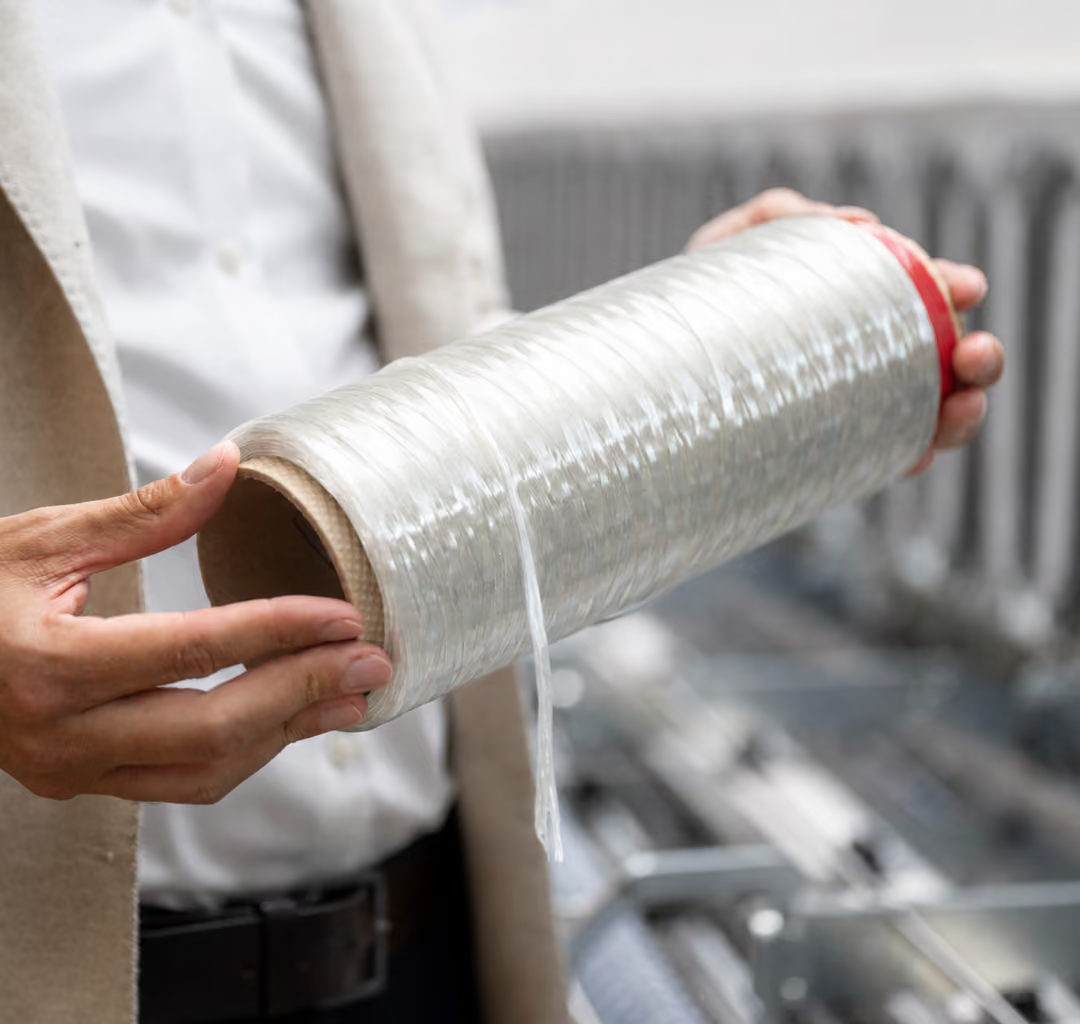
Close-up of glass fiber reinforced plastic (GFRP)

Glass fiber reinforced plastics (GFRP) consist of glass fibers embedded in a polymer matrix. The fibers carry the mechanical loads, while the matrix system ensures dimensional stability, protection, and load transfer. This combination results in a robust composite material with pronounced mechanical properties, high durability, and an attractive cost-performance ratio.

Components of GFRP:
01
/
Glass Fibers
Absorb tensile and compressive loads
02
/
Matrix System
Binds the fibers, protects against environmental influences, and transmits forces
03
/
Interface
Ensures optimal bond between fiber and matrix
Contact us
003
/
Advantages

Advantages of Glass Fiber Reinforced Plastics

Cost-Effectiveness
High Strength at Moderate Weight
Chemical Resistance
Electrical Insulation and Radiation Transparency
Damping Properties
Talk to an expert
Background image showing fiber composite structure
004
/
Properties & differences

Material Properties and Differences

Glass fiber reinforced plastics are anisotropic; their mechanical properties can be precisely adjusted through fiber orientation. This is a key advantage of this material class: strength and stiffness are placed exactly where forces occur. The electrical insulation and radiation transparency make GFRP particularly interesting for applications in electrical engineering, sensor technology, and medical technology.
Glass fiber reinforced plastic (GFRP) component
Compared to CFRP
Lower material costs, electrically insulating, radiation transparent
Carbon fiber reinforced plastic (CFRP) component
Compared to Metals
Corrosion-free, significantly more formable, lower weight
Glass fiber reinforced plastic (GFRP) component
Compared to Unreinforced Plastics
Higher strength and stiffness
005
/
process

Manufacturing of GFRP Parts

GFRP components are created by combining glass fibers and matrix systems. At BIONTEC, we specifically focus on Tailored Fiber Placement in combination with Resin Transfer Molding. Load-path-optimized fiber placement and controlled resin infiltration result in uniform, reproducible structures of the highest quality.

Our process steps:
01

Tailored Fiber Placement (TFP)

Computer-controlled, load-path-optimized fiber placement for optimizedstructures

02

Preforming

Shaping and fixing of fiber layers to create a stable preform for resin injection

03

Resin Transfer Molding (RTM)

Resin infusion in a closed mold for consistent component quality

006
/
our Approach
Your Specialist for Glass Fiber Reinforced Plastics
Close-up of a fiber-reinforced composite component

Our strength lies in taking a holistic view of materials, design, and manufacturing. By combining manyyears of experience, in-depth engineering expertise, and state-of-the-art composite manufacturingprocesses, we develop components that are both technically compelling and economically viable.

Our Holistic Approach:
01
/
Material selection based on individual requirements and preferences
02
/
Development of load-path-optimized fiber architectures based on bionic principles
03
/
Efficient manufacturing using Tailored Fiber Placement & Resin Transfer Molding (or Hot Compression Molding)
04
/
Scalable production from prototype to high-volume series production

At BIONTEC, you receive glass fiber reinforced plastic solutions precisely tailored to your requirements.

Contact us
007
/
faq
FAQ Glass Fiber Reinforced Plastics
Which components are particularly suitable for GFRP?
In which industries is GFRP used?
Is GFRP stronger than metal?
What is the difference between GFRP and CFRP?
Is GFRP cost-effective for series applications?
Is GFRP recyclable?
Nächste Schritte
Speak With an Expert
Full name *
Company *
E-Mail *
Phone number *
Subject *
Project Description *

By submitting the entered data, you agree to data processing and confirm our privacy policy. You can withdraw your consent at any time by sending an email to composites@biontec.ch.

Vielen Dank! Ihre Nachricht wurde empfangen!
Uups! Beim Absenden des Formulars ist ein Fehler aufgetreten.