Carbon Composite Manufacturer
We develop and manufacture load-path-optimized composite parts using Tailored Fiber Placement (TFP) and Resin Transfer Molding (RTM)
precise & scalable, from concept to series
Standard composites don't fit complex load paths
Conventional composite manufacturing is hard to scale
Metal components are too heavy for high performance


Your partner for industrial composites
CARBON COMPOSITES
We primarily develop and manufacture components made from carbon fiber-reinforced plastics, as this material class offers significant advantages when it comes to achieving maximum performance at minimal weight.


LOAD-PATH-OPTIMIZED FIBER ARCHITECTURE
Our composites are load-path optimized. This means that we align the fibers precisely along the actual load paths of the component. As a result, material is used only where needed, structural performance is enhanced, and weight is reduced to a minimum.


Our Composite Services

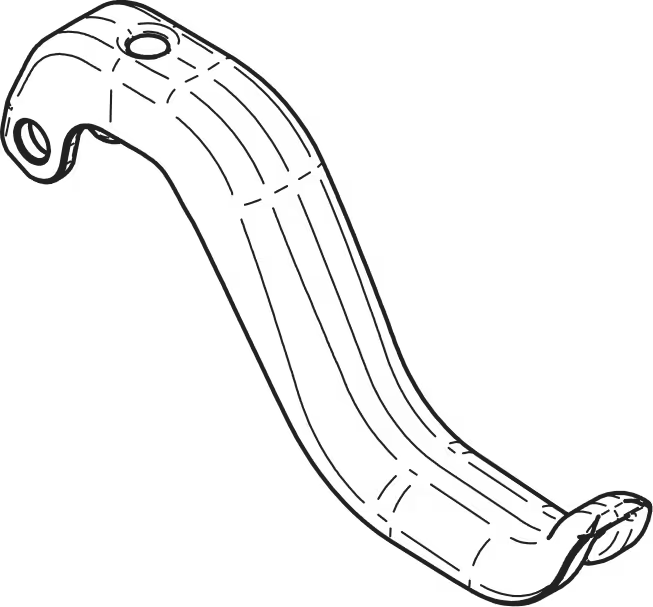
From initial concept to series production, we support your product throughout. Our engineers analyze loads, environments, and volumes to develop technically robust and economically viable solutions.

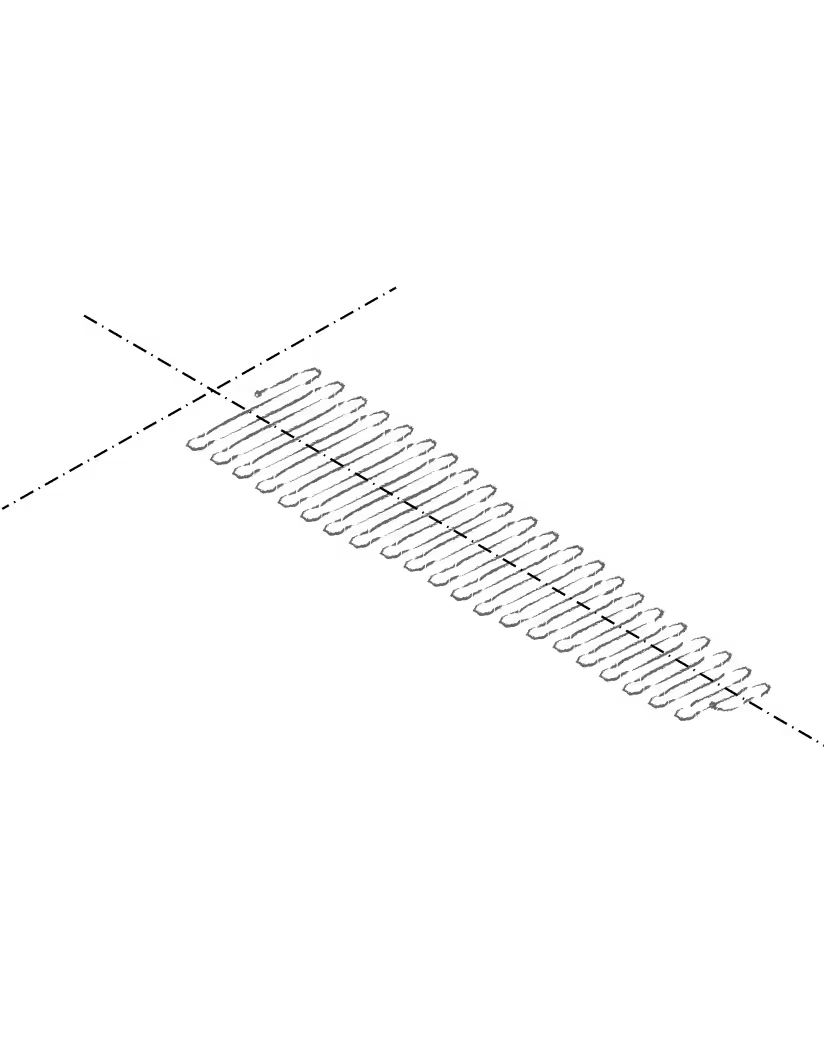


Textile embroidery technology places carbon fibers in optimized patterns. Digital control ensures reproducible fiber architecture in every component.
The fiber layups are further processed into preforms, providing the foundation for the next production step.
Resin Transfer Molding (RTM):
A thermoset resin matrix is injected into the fiber preforms and consolidated under pressure to form composite components.
or
Hot Compression Molding (HCM):
Thermoplastic fiber preforms are consolidated under heat and pressure to form composite components.


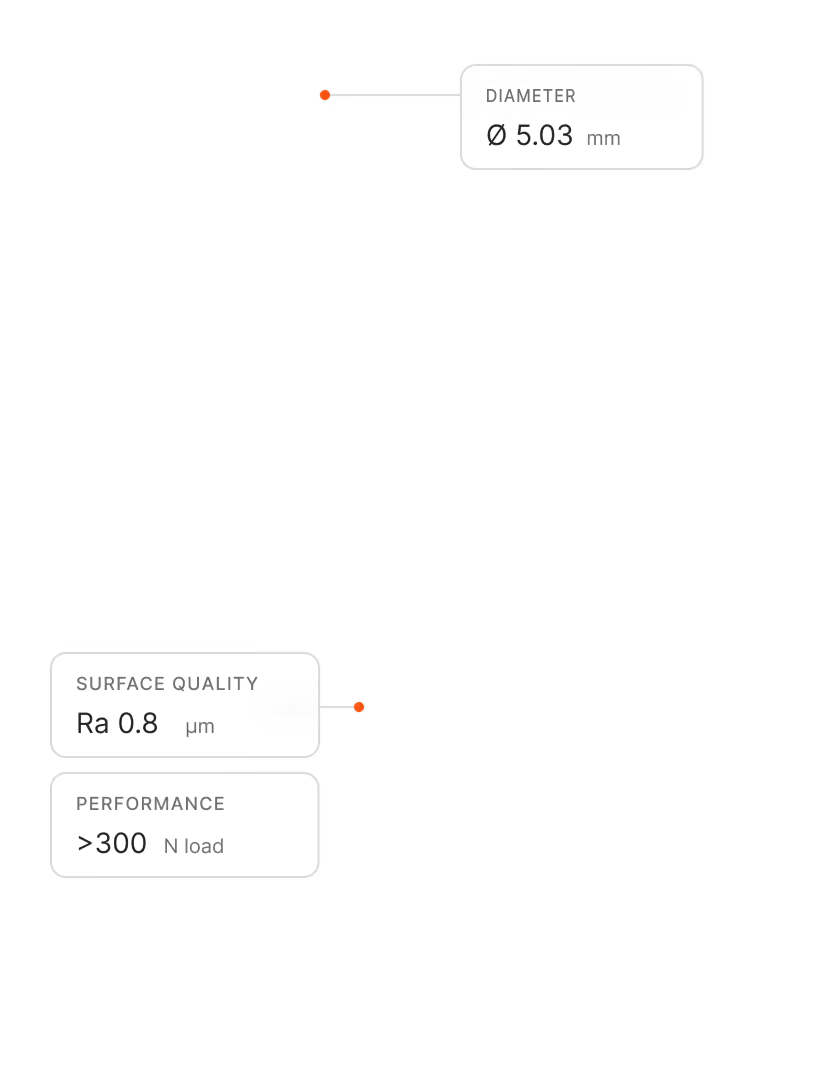
Robust, strictly controlled processes ensure consistently high quality in small and large series production. Integrated tests, monitoring, and statistical analyses document production stability and reproducibility.


Why Engineers Choose Us

Drone Structure
© biontec
Carbon offers high specific stiffness, meaning high stiffness relative to its weight. This enables the production of lightweight components with high structural stiffness.
Carbon composites offer high stiffness with low weight and minimal thermal expansion, ensuring stable dimensions and precision across varying temperatures.
In dynamic applications, composites typically exhibit excellent fatigue strength. This can enable higher cycle rates in production machinery and longer maintenance intervals.
Key Features of our Carbon Composites
The inherent damping properties reduce vibrations, wear, and fatigue, improving stability and protecting sensitive components in high-speed applications.
In addition to their structural role, composites can also integrate functional elements. This enables intelligent structures with embedded components.
Depending on the matrix system, composite components can withstand aggressive media and corrosion. The chemical resistance of composites makes them a viable alternative to stainless steel in many applications.
Through the specialized processing of composites, we can achieve a gradual failure of the structure. Furthermore, the fiber architecture can contribute to a benign failure behavior and increase operational safety.
Thanks to load-path-optimized manufacturing, material is used only where it contributes structurally. This reduces material waste. In addition, the resulting weight reduction can lower energy consumption during transportation and operation throughout the product lifecycle.
The low thermal expansion of carbon enables highly stable dimensional accuracy. This is particularly important in precision applications where measurement accuracy must be maintained under changing environmental conditions.
Bionic fiber placement enables a wide range of geometries. This design freedom allows the realization of complex carbon composite components that would not be feasible with other manufacturing technologies.
With the right fiber selection, composites can be designed to be transparent to various forms of radiation (e.g., X-rays, radio waves). This enables applications such as medical imaging devices and antenna structures.
Composite materials enable highly integrated component designs and can significantly reduce the number of individual parts required. What would otherwise require a complex metal assembly can often be consolidated into a single composite component.


Carbon Composites in Practice
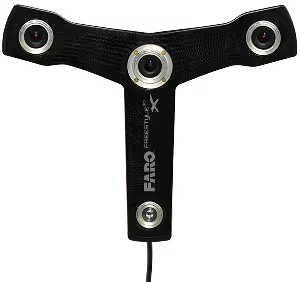
CFRP-Cockpitgriff: Erhebliche Gewichtseinsparungen. Höchste Sicherheitsstandards.
Minimal weight, maximum reliability: cost-effective composite components for aerospace, space, and New Space applications.


CFRP Cockpit Handle: Significant weight savings. Highest safety standards.
Radiolucent devices for medical diagnostics. Lightweight orthopedic aids. X-ray transparent operating tables. Sterilization-resistant instruments.

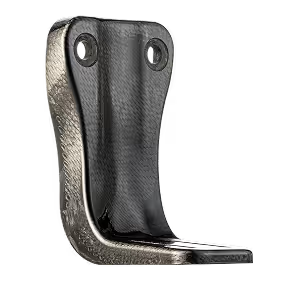
Carbon fiber prosthetic foot mount: Lightweight design with maximum strength.
Precision-oriented composite solutions. Dimensionally stable structures, temperature-independent assemblies, and low-vibration mounts.

Carbon composite support structure: Dimensionally stable. Highly precise measurement results.
Higher machine performance through lightweight, rigid, and damped composite structures for precision and high-speed operation.


Carbon fiber pick-and-place rocker: Optimized for extremely high cycle rates.
Light, robust, and efficient. Advanced composite components that increase range, boost payload capacity, and improve the reliability of unmanned aerial systems.


Lightweight CFRP and GFRP drone structure: Integrated cables, sensors, antennas, and LEDs.
Strength meets precision. Lightweight composite solutions for high structural performance, durability, and ergonomic efficiency in next-generation robotics and exoskeletons.


CFRP Cockpit Handle: Significant weight savings. Highest safety standards.